Key Takeaways
- 1Heart rate variability serves as a window into autonomic nervous system status
- 2Real-time biometric feedback enables immediate training adjustments
- 3Wearable sensor technology democratizes access to professional-grade monitoring
- 4Individual response patterns require personalized interpretation protocols
The Evolution of Biometric Monitoring in Athletic Development
Athletic development has undergone a fundamental transformation over the past two decades. Where coaches once relied primarily on subjective observations and periodic fitness testing, modern athletic programs now have access to continuous streams of physiological data that provide unprecedented insight into athlete status. This shift from periodic assessment to continuous monitoring represents one of the most significant advances in sports science methodology.
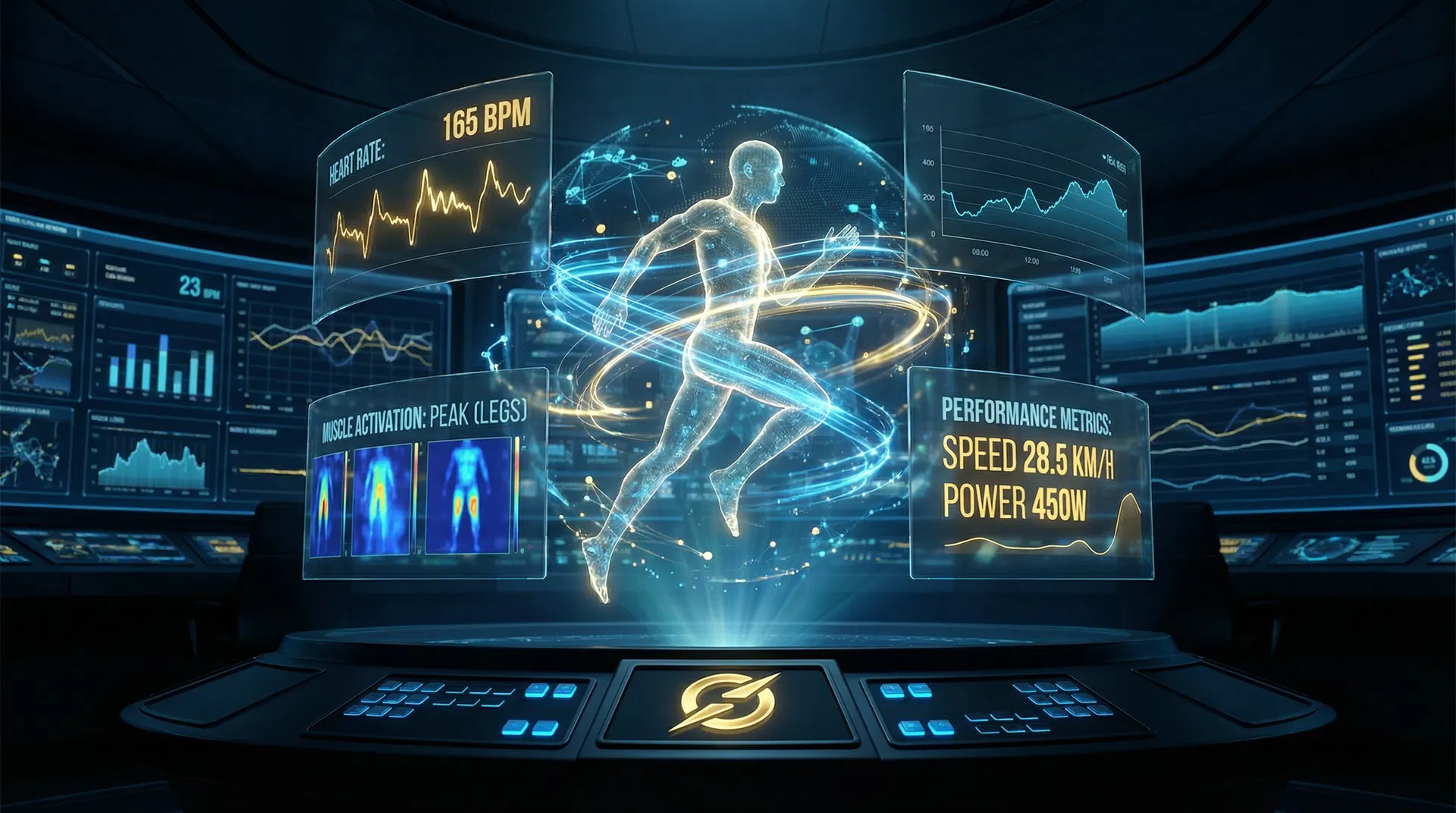
Biometric monitoring encompasses the systematic collection and analysis of physiological measurements that reflect an athlete's current state of readiness, recovery status, and training response. These measurements range from simple metrics like heart rate and sleep duration to sophisticated measures including heart rate variability, oxygen saturation, and core body temperature. When integrated into comprehensive monitoring systems, these diverse data streams create a multidimensional picture of athlete physiology that enables coaches and sports science staff to make informed decisions about training prescription and recovery management.
Core Biometric Metrics and Their Interpretation
Heart Rate Variability as a Readiness Indicator
Heart rate variability (HRV) represents the variation in time intervals between successive heartbeats. While a perfectly regular heartbeat might seem optimal, research has demonstrated that greater variability in heart rate intervals actually reflects superior autonomic nervous system function and training readiness. HRV serves as a window into the balance between sympathetic (fight-or-flight) and parasympathetic (rest-and-recover) nervous system activity.
During periods of high training stress or inadequate recovery, sympathetic nervous system dominance increases and HRV typically decreases. Conversely, during recovery periods or when training stress is appropriately managed, parasympathetic tone increases and HRV typically rises. This relationship makes HRV an exceptionally valuable metric for identifying when athletes are adequately recovered and ready for high-intensity training, versus when additional recovery is needed.
Sleep Architecture and Performance
Sleep represents the most powerful recovery intervention available to athletes, yet it remains one of the most commonly neglected aspects of training programs. Modern wearable devices enable detailed tracking of sleep duration, sleep architecture (the proportion of light, deep, and REM sleep), and sleep efficiency. These metrics reveal that sleep quality varies substantially between individuals and across different training phases.
Athletes experiencing high training stress often demonstrate disrupted sleep patterns, with reduced deep sleep duration and increased nighttime awakenings. These sleep disruptions impair the physiological recovery processes that occur during sleep, creating a vicious cycle where inadequate recovery leads to further sleep disruption. Identifying these patterns through biometric monitoring enables targeted interventions to restore healthy sleep patterns.
Oxygen Saturation and Training Intensity
Oxygen saturation (SpO2) represents the percentage of hemoglobin in arterial blood that is saturated with oxygen. While healthy individuals typically maintain SpO2 above 95 percent at sea level, athletes training at altitude or engaging in intense exercise may experience transient reductions in SpO2. Monitoring SpO2 patterns provides insight into training intensity and the adequacy of recovery between high-intensity efforts.
Wearable Sensor Technology and Real-Time Feedback
The proliferation of wearable sensor technology has democratized access to biometric monitoring that was previously available only to elite professional athletes. Modern smartwatches, chest straps, and specialized sports watches provide continuous measurement of heart rate, HRV, sleep, and other physiological markers. This accessibility enables coaches at all competitive levels to implement biometric monitoring systems.
The value of wearable technology extends beyond mere data collection. Modern systems provide real-time feedback to athletes, enabling them to understand their physiological responses to training and make immediate adjustments. An athlete might notice that a particular training session produced an unexpectedly large elevation in heart rate, signaling either that the training stimulus was greater than intended or that recovery status was compromised. This real-time feedback loop creates opportunities for immediate adjustment and learning.
Personalization and Individual Response Patterns
One of the most important principles in biometric monitoring is that individual response patterns vary substantially. Two athletes with identical training programs may demonstrate very different biometric responses, reflecting differences in training history, genetics, lifestyle factors, and individual physiology. Effective biometric monitoring systems account for these individual differences through personalized interpretation protocols.
Establishing individual baseline values is essential for meaningful interpretation of biometric data. An HRV value that indicates inadequate recovery for one athlete might represent normal status for another. Similarly, sleep duration requirements vary between individuals, with some athletes thriving on seven hours while others require nine or more hours for optimal recovery. Personalized baselines enable coaches to identify when an individual athlete's metrics deviate from their normal pattern, signaling a need for intervention.
Integration with Training Load Monitoring
The true power of biometric monitoring emerges when biometric data is integrated with training load data. Training load quantifies the physiological stress imposed by training sessions, while biometric data reflects the athlete's capacity to tolerate and recover from that stress. The relationship between training load and biometric markers provides a comprehensive picture of the training-recovery balance.
When training load increases but biometric markers indicate adequate recovery capacity, the training stimulus is appropriately matched to the athlete's current state. Conversely, when training load increases but biometric markers indicate compromised recovery status, the risk of overtraining and injury increases substantially. This integrated approach enables coaches to optimize training prescription by matching training stress to recovery capacity.
Implementation Across Competitive Levels
The implementation of biometric monitoring varies across competitive levels, reflecting differences in available resources and monitoring sophistication. High school programs typically implement basic monitoring of heart rate and sleep, providing valuable information about training stress and recovery without requiring expensive equipment. University programs often add HRV monitoring and more sophisticated analysis of biometric patterns. Professional programs implement comprehensive monitoring systems that track dozens of physiological variables and employ advanced analytics to extract actionable insights.
Regardless of competitive level, the fundamental principle remains constant: biometric monitoring provides objective data that informs training decisions. This data-driven approach to training prescription represents a significant advancement over subjective assessment alone, enabling coaches to optimize training outcomes while reducing injury risk and overtraining.
"The athlete of the future will not simply train harder, but train smarter through continuous biometric feedback that informs every training decision."